

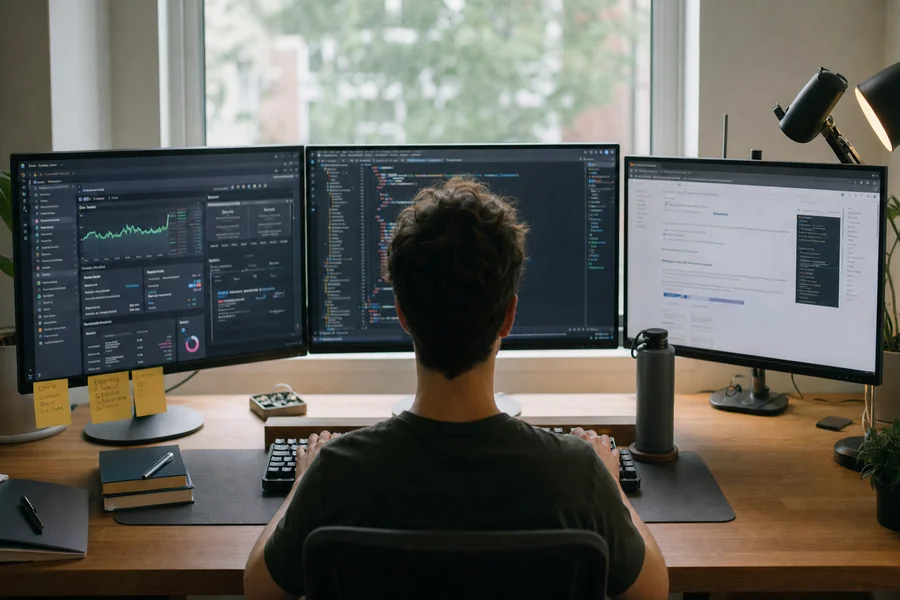
Introduction to Monitor Monitor Quikconsole Com
Monitor Monitor Quikconsole Com is a useful topic for understanding computer monitors and modern display technology. A monitor is one of the most important parts of a computer setup. It allows users to see applications documents videos games images and other digital content.
A monitor may look like a simple screen but modern displays contain many technologies that affect the viewing experience. Panel type resolution refresh rate response time brightness contrast and connectivity can all influence how a monitor performs.
Different users have different needs. A student may need an affordable display for study and everyday browsing. An office worker may prefer a monitor with comfortable viewing features. A designer may require accurate colors and high resolution. A gamer may focus more on refresh rate and response time.
Choosing the right monitor therefore requires an understanding of basic display features. A high-priced monitor is not automatically the best option for every user. The right choice depends on how the display will be used.
Monitor technology has changed significantly over the years. Older displays were often large and heavy while modern monitors can be thin and lightweight. Many current models also include adjustable stands and multiple connectivity options.
Some monitors are designed for general computing while others are built for specialized activities. Ultrawide monitors provide additional horizontal space. High-refresh-rate displays are designed for smooth motion. Professional displays often focus on color accuracy.
Understanding these differences can make the buying process easier. It can also help users get better performance from a monitor they already own.
Main Types of Computer Monitors
Monitors come in several types. Each type offers different advantages and is designed for particular uses.
IPS Monitors
IPS panels are widely used because they can provide good viewing angles and strong color performance. They are suitable for general computing photography design and many gaming applications.
When viewing an IPS display from different positions the image can remain relatively consistent compared with some other panel technologies.
VA Monitors
VA panels are known for strong contrast. They can produce deeper blacks than many conventional IPS displays.
VA monitors can work well for movies gaming and general use. Their performance varies between models so users should consider the complete specification rather than the panel name alone.
TN Monitors
TN panels have traditionally been associated with fast response times and affordable pricing. They have been used widely in gaming monitors.
However viewing angles and color performance may be less impressive than some newer panel technologies.
OLED Monitors
OLED displays use individual pixels that can produce their own light. This allows OLED monitors to provide very deep blacks and high contrast.
They can offer excellent image quality but may cost more than traditional LCD-based displays. Users should also understand the care requirements associated with OLED technology.
Ultrawide Monitors
Ultrawide monitors provide a wider aspect ratio than standard displays. They can be useful for multitasking because users can place multiple windows side by side.
They are popular among professionals gamers and users who work with large timelines or multiple applications.
Curved Monitors
Curved displays have a curved screen surface. The curve can create a more immersive viewing experience especially on larger or ultrawide monitors.
The usefulness of a curved design depends on personal preference and the viewing distance.
Important Monitor Features and Benefits
Several specifications can affect the performance of a monitor. Understanding them can help users make better choices.
Resolution
Resolution describes the number of pixels displayed on the screen. Higher resolutions can provide more detail.
Common resolutions include Full HD 1920 × 1080 QHD 2560 × 1440 and 4K UHD 3840 × 2160.
A higher resolution can be useful for detailed images and larger screens. However it also requires more graphics processing power in demanding applications and games.
Refresh Rate
Refresh rate describes how many times the screen can update each second. It is measured in hertz or Hz.
A 60 Hz display refreshes up to 60 times per second. Higher refresh rates such as 120 Hz 144 Hz or 240 Hz can provide smoother motion when the computer can produce enough frames.
Response Time
Response time describes how quickly pixels can change from one state to another. A lower response time can help reduce visible motion artifacts in fast-moving content.
This specification is particularly relevant for gaming.
Brightness
Brightness affects how clearly the screen can be viewed under different lighting conditions. A brighter display may be easier to see in a well-lit room.
Contrast
Contrast describes the difference between dark and bright areas. Strong contrast can make images appear more distinct.
Color Accuracy
Color accuracy is important for photography video editing graphic design and other visual work. Professional users may look for displays that cover specific color spaces and support calibration.
Connectivity
Modern monitors may include HDMI DisplayPort USB-C and other connections. The correct connection depends on the computer and the required features.
Some USB-C monitors can also provide power to compatible laptops. This can reduce cable clutter in a workspace.
How to Choose the Right Monitor
Choosing a monitor becomes easier when the buying decision starts with the intended use.
An office user may prioritize screen size resolution comfort and connectivity. A gamer may focus on refresh rate response time adaptive synchronization and resolution.
A creative professional may pay more attention to color accuracy resolution and panel quality. A student may want a reliable display at a reasonable price.
Screen size is another important consideration. Larger screens provide more workspace but they also require more desk space.
A 24-inch display can be practical for basic computing. A 27-inch screen provides more workspace while remaining common for desks. Larger displays can be useful for multitasking and immersive entertainment.
Resolution should also match the screen size and computer hardware. Full HD can work well on smaller displays while QHD and 4K can provide greater detail on larger screens.
Users should also check the available ports. If a laptop only supports USB-C then a monitor with suitable USB-C connectivity may simplify the setup.
Ergonomics should not be ignored. An adjustable stand can allow users to change the height tilt and viewing position.
VESA compatibility can also be useful for people who plan to use a monitor arm or wall mount.
The environment matters too. A bright room may require a display with sufficient brightness and good anti-glare properties.
Finally consider the total cost. The monitor itself is only one part of a setup. A high-resolution display may require a more capable graphics card and suitable cables.
Monitor Comparison Table
The following table compares common monitor types and features to help users understand their typical applications.
| Monitor Type | Main Strength | Common Use | Key Consideration |
| IPS | Color and viewing angles | Office and creative work | Contrast varies |
| VA | Strong contrast | Movies and gaming | Motion performance varies |
| TN | Fast response and value | Competitive gaming | Viewing angles |
| OLED | Deep blacks and contrast | Premium gaming and media | Cost and care |
| Ultrawide | Large horizontal workspace | Multitasking | Desk space |
| Curved | Immersive viewing | Gaming and entertainment | Personal preference |
| 4K Monitor | High image detail | Design and media | Hardware requirements |
| High-Refresh Monitor | Smooth motion | Gaming | Needs suitable frame rates |
This comparison shows why there is no single monitor type for every user.
A person who works with documents may not need the same features as a competitive gamer. Similarly a professional photographer may prioritize color accuracy over refresh rate.
The best choice is the one that matches the actual tasks performed most often.
Monitor Setup and Performance Tips
After purchasing a monitor the setup can have a major effect on the viewing experience.
Start by positioning the monitor at a comfortable height. The top portion of the display should generally be around eye level or slightly below it.
The viewing distance should also feel comfortable. Sitting too close to a large screen can make it harder to view the entire display naturally.
Adjust brightness based on the room. A display that is extremely bright in a dark room may cause unnecessary discomfort.
Use the correct display resolution. The operating system should normally be set to the monitor’s native resolution for the clearest image.
If the monitor supports a higher refresh rate make sure the operating system and graphics settings are configured correctly. Some displays do not automatically operate at their maximum refresh rate.
For gaming users should also check adaptive synchronization features when supported. These technologies can help reduce visible tearing under suitable conditions.
Color settings may need adjustment as well. Many monitors include different picture modes such as standard movie gaming or sRGB.
Creative professionals may benefit from calibration equipment when accurate color reproduction is important.
Cable quality and compatibility should also be considered. Make sure the cable supports the resolution and refresh rate being used.
Multiple monitors can improve productivity for some users. A second display can hold email communication research or reference materials while the primary screen is used for focused work.
However more screens can also require more desk space and graphics resources.
Monitor Maintenance and Common Problems
Proper maintenance can help keep a monitor working reliably.
Keep the screen free from excessive dust. Use an appropriate soft microfiber cloth when cleaning the display. Avoid applying liquid directly to the screen.
Follow the manufacturer’s cleaning recommendations because different screen surfaces can have different care requirements.
Cable connections should also be checked if the display suddenly loses signal. Loose HDMI DisplayPort or power connections can cause problems.
If the screen appears too dark check the brightness settings and power-saving options.
If the image looks blurry confirm that the display is running at its native resolution. Incorrect scaling or resolution settings can affect clarity.
For flickering problems check the cable refresh rate graphics driver and display settings. In some situations the issue may be related to hardware.
Dead or stuck pixels can sometimes appear on displays. Manufacturers may have different policies regarding pixel defects.
Users should also avoid blocking ventilation areas on monitors that require active cooling.
OLED monitor owners should follow the manufacturer’s recommendations for preventing image retention and managing long periods of static content.
When a monitor develops a serious hardware problem it is generally better to use professional service rather than opening the device without the necessary experience.
FAQs About Monitor Monitor Quikconsole Com
What is Monitor Monitor Quikconsole Com?
Monitor Monitor Quikconsole Com is a topic related to computer monitors and display technology. It covers monitor types features specifications setup maintenance and buying considerations.
What is a computer monitor?
A computer monitor is a display device that shows visual information produced by a computer or another compatible device.
Which monitor type is best for general use?
There is no single best type for everyone. IPS displays are commonly used for general computing because they can provide good viewing angles and balanced image quality.
Is a higher refresh rate better?
A higher refresh rate can make motion appear smoother. It is especially useful for gaming and other applications with fast movement. The computer must also be capable of producing suitable frame rates.
What resolution should I choose?
The right resolution depends on screen size computer hardware and intended use. Full HD is suitable for many basic tasks while QHD and 4K can provide greater detail.
Is 4K useful for everyday work?
4K can provide a sharp image and additional workspace. However some users may prefer a lower resolution because it can require less graphics processing power and may reduce scaling requirements.
What is the difference between IPS and VA?
IPS panels are generally known for viewing angles and color performance. VA panels are often known for stronger contrast. Actual performance depends on the specific monitor.
Are OLED monitors good for gaming?
OLED monitors can provide strong contrast deep blacks and fast pixel response. They can be attractive for gaming but users should consider cost and the manufacturer’s guidance for long-term display care.
What refresh rate is good for gaming?
The appropriate refresh rate depends on the type of games played and the computer’s graphics performance. Common gaming monitors include 120 Hz 144 Hz 165 Hz and higher options.
Does monitor size matter?
Yes. Larger monitors provide more screen area but require more desk space. The best size depends on viewing distance desk dimensions and personal preference.
What is response time?
Response time refers to how quickly pixels can change between states. Lower response times can help reduce visible motion artifacts in fast-moving content.
Do I need a curved monitor?
A curved monitor is not necessary for everyone. Some users enjoy the immersive viewing experience while others prefer a flat screen.
Can a monitor improve productivity?
A suitable monitor can provide more workspace and make multitasking easier. Larger or higher-resolution displays can allow users to keep multiple windows visible.
How should I clean my monitor?
Use a soft microfiber cloth and follow the manufacturer’s cleaning instructions. Avoid spraying liquid directly onto the screen.
Why does my monitor show no signal?
Check the power connection and video cable first. Also confirm that the correct input source is selected and that the computer is sending a compatible signal.
Final Thought
Monitor Monitor Quikconsole Com provides a useful starting point for understanding modern computer displays. A monitor affects how users interact with work software entertainment games and digital content.
The right display depends on individual needs. Resolution refresh rate panel type size connectivity and ergonomics all deserve attention before making a purchase.
Office users may prioritize comfort and productivity. Gamers may focus on smooth motion and response time. Creative professionals may require accurate colors and high resolution.
A good monitor should fit both the computer and the user’s daily activities. It should also fit the available desk space and provide the necessary connections.
After choosing a display proper setup can improve the experience. Correct resolution comfortable positioning suitable brightness and regular maintenance can all make a difference.
Instead of focusing only on one specification consider the complete monitor. A balanced display that matches real needs can provide useful performance for years.
